14 minute read
Oct 2026

Food for Thought: Feeding a Changing World



Fears about feeding ourselves are nothing new. Indeed, few forces have shaped human history more profoundly than the drive to secure a reliable food supply — from the earliest days of hunting and gathering, through the transition to settled agriculture, to today’s globally interconnected food system.
The food industry exemplifies human ingenuity at its best. Over the past 50 years, the world has added more than 4 billion mouths to feed, yet advances in agricultural intensification have enabled food producers to keep pace. Consider grain: an acre of land today typically yields around 4 tons, compared with just over 1 ton in 1961.
But such productivity gains have come at a cost. Decades of striving for ever higher yields are now pushing the planet’s resources to their limits. Intensive food production has increased pressure on finite groundwater supplies and degraded soils and ecosystems. Yet agriculture itself depends on these natural resources and the services they provide, from supporting pollinators and regulating water flows to maintaining soil fertility.
The result is a resurrection of age-old fears about food security. A decade or so ago, a United Nations (UN) official warned that the pace of soil erosion might mean we have only 60 annual harvests left. More recently, experts have warned that an uptick in extreme weather and climate change could cause crops to fail and food prices to spike.
Even conservative assessments of current trends suggest the long-running rise in agricultural productivity through farming intensification is peaking. The challenge is increasingly structural: depleted soil and water supplies, a changing climate, and greater exposure to extreme weather are making it harder to sustain past productivity growth rates. As a sobering recent paper by the Moore Foundation concludes: “The capacity [of today’s food system] to provide abundant, affordable, and stable food supplies can no longer be taken for granted.”
Twin Priorities: Innovation & Systems Thinking
So, what can food producers do to ensure our food system is resilient in the future? And how can other key players in business, government, and civil society assist?
The core advice is twofold, says Phil Webster, Partner and Head of Arthur D. Little’s (ADL’s) Consumer Goods, Retail, and Agriculture practice. First, continue to innovate. A cursory glance at the history of food production explains why. From the domestication of livestock to last century’s “Green Revolution” (when new crop varieties and farming techniques dramatically increased agricultural yields), human invention and creativity have been at the heart of every great leap forward in agriculture.
Second, adopt a systems perspective. Even a lone subsistence farmer is affected by the decisions of others, be it the polluting textile mill upriver or the distant policymaker who changes the way in which pesticides are regulated. Demand is also shifting through changes in consumer preferences and dietary habits, fueled by shifts in consumption toward vegetarianism, veganism, and the rise of weight-loss drugs. For a large agribusiness operating across multiple farms and markets, those interdependencies multiply. Innovations that look effective in isolation can ultimately fall short if financing, regulation, infrastructure, or other parts of the wider food system prevent them from scaling.
Assess solutions across the whole food ecosystem to avoid solving one problem while creating another
Producing More with Less
For food producers, the most immediate challenge is maintaining and improving yields as environmental pressures intensify. Here, technology offers considerable promise. As far as innovators go, today’s global agriculture sector is well catered for, Webster argues. He points to the surging growth of the agtech sector, whose current market value of around US $24 billion is projected to more than double in the next six years.
In the first quarter of 2026 alone, 163 agtech startups garnered $1.89 billion in investment deals. The deal list includes category descriptors such as on-farm digitalization, automation, novel crop inputs, and new crops and genetics, highlighting that the science of the past is now becoming the commercial reality of today.
Much of this science falls into what experts often refer to as “precision agriculture.” Aided by tools like near-real-time monitoring, GPS-guided machinery, and soil-fertility prediction, farmers can, as the name suggests, direct their inputs to where their impact will be greatest. This can drive a shift towards regenerative agriculture — approaches used to restore or improve agricultural systems while continuing to produce food.
Webster gives the example of nutrient supply: “So, rather than spreading a whole field with fertilizer, for instance, you now have robotic tractors going around with sophisticated sensors putting fertilizer only on the plants that really need it.”
Done well, this “ultra-targeted” approach can increase productivity while reducing unnecessary agricultural inputs and their associated costs. In one recent study of maize production in China, researchers demonstrated an 8.37% increase in yield and a 4.7% reduction in nitrogen fertilizer use through optical sensors and digital control systems to target fertilizer application.
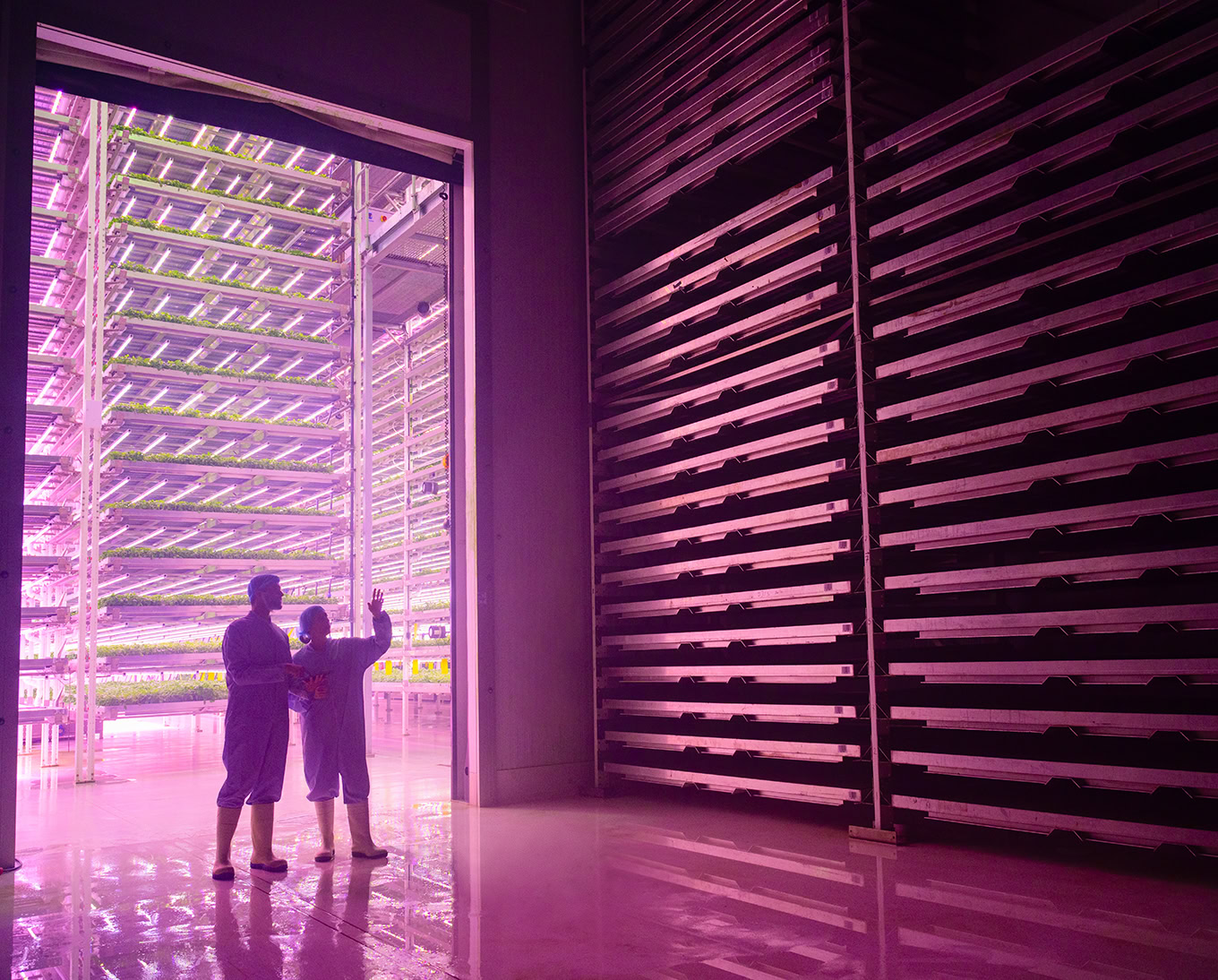
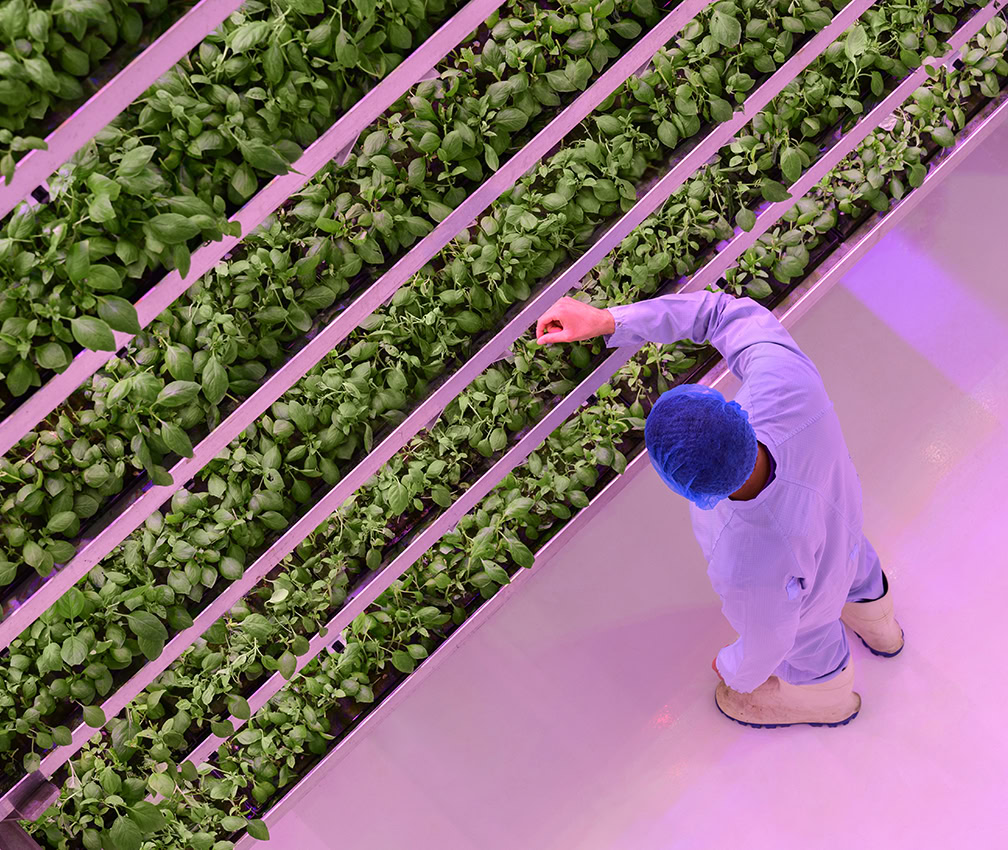
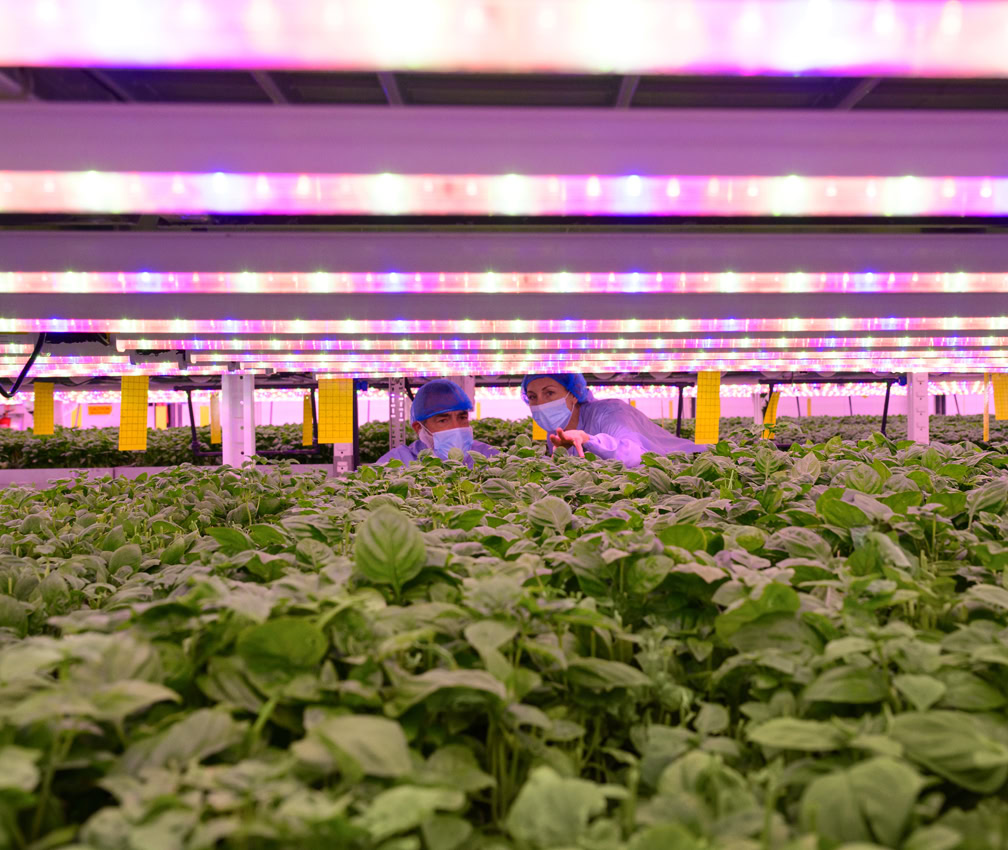
An extreme example of this precision-led approach is vertical farming, in which crops grow indoors in stacked layers. While still small in scale compared with conventional agriculture, vertical farms demonstrate the potential of highly controlled production in certain settings: variables such as water, nutrients, CO2, and light can be continuously monitored and adjusted to optimize growing conditions.
Innovation Within Environmental Limits
One increasingly important factor weighs heavily on today’s food innovators in a way it didn’t on their predecessors: namely, the imperative to balance productivity gains with environmental constraints, such as water availability, soil fertility, and the planet’s carbon-absorption capacity.
Such constraints have always been there, but never in such an acute fashion. Across the planetary sciences, experts are warning of “tipping points” as the world’s ecological, hydrological, and climatological resources edge toward phases of irreversible decline.
The implications for food security are potentially severe. Consider ocean warming. At present, more than 3.2 billion people rely on fish for at least a fifth of their animal protein. As ocean temperatures rise (as they have done for the last nine consecutive years), the distribution and productivity of fish stocks can change, with consequences for communities that depend heavily on seafood.
As an early indication of what could await, a recent study published in PNAS examined coastal communities in countries highly dependent on seafood. It found that greater exposure to marine heat waves was associated with increases of 6.5% in child wasting and 8.8% in child stunting — highlighting how changes in ocean conditions can translate into food security and nutrition risks for vulnerable populations.
Fortunately, innovators aren’t sitting on their hands. Indeed, the search for food production models that operate within environmental boundaries is unleashing a new wave of creativity.
This new wave falls into two basic buckets. First are solutions designed to reduce environmental impacts, such as more targeted biopesticides and no-till or low-till agriculture, which can reduce soil disturbance and associated carbon losses. Second are innovations that adapt to today’s changing environment. Drought-resistant crops are the classic example, but there are many more, ranging from shade-providing agroforestry and strategic crop diversification to solar-powered irrigation and early-warning weather systems.
Together, these approaches can help secure future food production by reducing environmental pressures and building resilience to changing conditions. Piedad Martín, Deputy Director of the Office of Climate Change, Biodiversity and Environment (OCB) at the UN Food and Agriculture Organization (FAO), points to livestock farmers in drought-prone regions of northern sub-Saharan Africa replacing a portion of their dairy cattle with camels and goats. The result? A 5% increase in milk production, together with a 15% drop in water demand.
Use technology to increase productivity while reducing pressure on constrained resources such as water supplies and soil fertility
Avoiding System-Level Risks
The problem arises when food production is optimized in isolation. Consider input-intensive industrial monocropping, says Martín. While it might increase yields in the short term, repeatedly growing the same crop can deplete soil and groundwater while leaving farmers more exposed to shocks.
“Monocrops might work for now, but they lack the resilience that comes from diversity, so when there’s a crisis like a disease or flood event, then farmers risk losing their whole production in one go,” she says.
The same interdependencies operate at regional and national levels. Cattle-led deforestation might increase meat production in one area, for example, while jeopardizing rain-fed crops elsewhere. External shocks can expose similar vulnerabilities, as illustrated by the sharp increase in nitrogen fertilizer prices following disruption to shipping and energy flows through the Strait of Hormuz in 2026.
The lesson is clear: boosting production in one part of the food system cannot come at the expense of resources, resilience, or production elsewhere.
Beyond Production: Access & Affordability
Food security isn’t just about producing more food, however. Equally important is ensuring that the food already being produced gets to where it is needed: onto consumers’ plates, at an affordable price and in a form that is safe and nutritious.
As the UN’s latest “State of Food Security and Nutrition in the World (SOFI)” report confirms, the world’s farmers produce more than enough food for the world’s population. Despite this, an estimated 645 million (around 7.8% of the total) still face hunger.
“We produce far more calories than we need. So, at the end of the day, it’s not really a calories’ problem; it’s more a problem of distribution and equitable access,” states Carlo Stella, Managing Partner and Global Practice Leader of ADL’s Sustainability practice.
That doesn’t make productivity irrelevant. Maintaining and improving yields will remain essential as populations and environmental conditions change. Rather, the point is that producing more food alone cannot solve food insecurity: availability, affordability, and nutrition must be addressed alongside production.
Food security depends not only on producing enough food but making it affordable, accessible, and nutritious
Reducing Food Loss
Small improvements in those areas can unlock substantial gains, he adds. One area ripe for such intervention is logistics. According to SOFI, around 13% of all food produced is lost before it even reaches the shelves — and even more is wasted by consumers in affluent countries.
Innovations such as ambient-stable products and better-governed cold chains offer hope here, especially in developing world regions such as Africa where post-harvest losses are particularly acute. Such moves are being accelerated by advances in decentralized solar power solutions, Stella notes — a far cleaner and cheaper alternative to the diesel generators habitually used by food producers. Added to this are various business model innovations. Notable examples include Soko Fresh and ColdHubs, which allow farmers to rent storage spaces rather than invest up front in refrigeration systems themselves.
Going forward, AI-enabled predictive modeling is expected to enhance logistics efficiency even more. US retailer Walmart, for example, deploys a digital twin system that offers an early warning of supply chain stressors such as port congestion and shipment delays, which then enables it to take preemptive measures such as rerouting goods or chartering dedicated cargo vessels.
Affordability & Nutrition
Likewise, innovation is helping with the dual challenges of food affordability and good nutrition. As Webster notes, nutritious food can often cost more, presenting the average (i.e., non-wealthy) consumer on a fixed budget with an “either/or” conundrum: either pay more and consume less, or buy cheaper food and eat less healthily.
Producing food within planetary boundaries amplifies this tension, Webster explains: “The challenge is now to meet today’s new sustainability credentials without adding to the cost or compromising taste or shelf life.”
Food processing can also play a role. While the term “ultra-processed” is poorly defined and has negative connotations, processing encompasses nutritionally beneficial techniques such as fortification — adding vitamins to staples such as flour or cereals — and quick-freezing, which can help retain nutrients in fresh fruit and vegetables.
More novel approaches are also emerging. Take eggs. By adding omega-3-rich algae oil to poultry feed, producers can increase the levels of beneficial omega-3 fatty acids in the eggs that hens produce. In a country such as the Kingdom of Saudi Arabia, where eggs are a typical part of the everyday diet, the potential is particularly interesting: rather than persuading consumers to adopt new foods or supplements, nutritional gains can be built into something they already eat. It is an example of the wider potential highlighted in a recent ADL study: agricultural innovation can improve not only how much food is produced, but also its nutritional value.
The challenge is to meet today’s new sustainability credentials without adding to the cost or compromising taste or shelf life
Making Innovation Work at Scale
Again, for such innovations to really scale, their promoters need to adopt a holistic, systems-level view. Planning is clearly important here. A food security effort premised on the freezing or rehydration of food, for instance, won’t go far if recipients lack reliable refrigeration or access to clean water.
But it may well also demand the active engagement of key decision makers. Effective as the above measures might prove in isolation, none will work at scale if domestic tariffs increase the cost of food imports, say, or if price caps overly inhibit producers’ margins.
Finally, the management of demand is critical. How can consumers be encouraged to pivot to low-impact, high-nutrient diets without sacrificing the consumption of familiar and convenient food products that have been marketed to them their whole lives? How can consumers in affluent countries be convinced not to throw away a third of the food they buy or eat far too much of it?
The difficulty is that different actors often optimize for different outcomes: farmers for yields and income, retailers for price and availability, policymakers for affordability and food security, and investors for returns. A solution that makes sense to one part of the system may therefore create costs or barriers elsewhere. Systems thinking means identifying and aligning these incentives rather than simply introducing another technological fix.
Access to finance is another critical piece of this enabling environment, particularly for smallholder farmers. Here, different tools can address different barriers. The Global Agriculture and Food Security Program’s Private Sector Window, for example, uses concessional and blended finance to support promising agribusinesses that might otherwise struggle to attract investment. African Risk Capacity tackles a different problem, helping countries manage climate-related agricultural risks through insurance and other risk-financing tools.
At the farmer level, meanwhile, national warehouse-receipt systems can unlock credit against stored crops, reducing the pressure to sell immediately after harvest. Programs such as IFC’s Global Warehouse Finance Program can reinforce these systems by helping lenders expand commodity-backed financing.
These financing mechanisms are only part of the broader enabling environment. As the Moore Foundation report observes: “Healthy and sustainable food frequently appears less affordable because subsidies, pricing structures, and market concentration favor input-intensive production and ultra-processed foods.”
Ultimately, innovation alone will not guarantee food security. To scale and ensure that more sustainable, nutritious food is accessible and affordable, new technologies and practices need the right finance, infrastructure, incentives, and policies around them.
Bring farmers, businesses, investors, and policymakers together to reconcile competing priorities and enable solutions to scale
Key Takeaways
- Innovate sustainably. Use technology to increase productivity while reducing pressure on constrained resources, including water supplies and soil fertility.
- Think system-wide. Assess solutions across the whole food ecosystem to avoid solving one problem while creating another.
- Prioritize access. Food security depends not only on producing enough food but making it affordable, accessible, and nutritious.
- Design for scale. Build infrastructure, regulation, and market acceptance into innovations from the outset.
- Align incentives. Bring farmers, businesses, investors, and policymakers together to reconcile competing priorities and enable effective solutions to scale.