
12 minute read
Jun 2026

Power Struggle: The Race to Reinvent the Grid


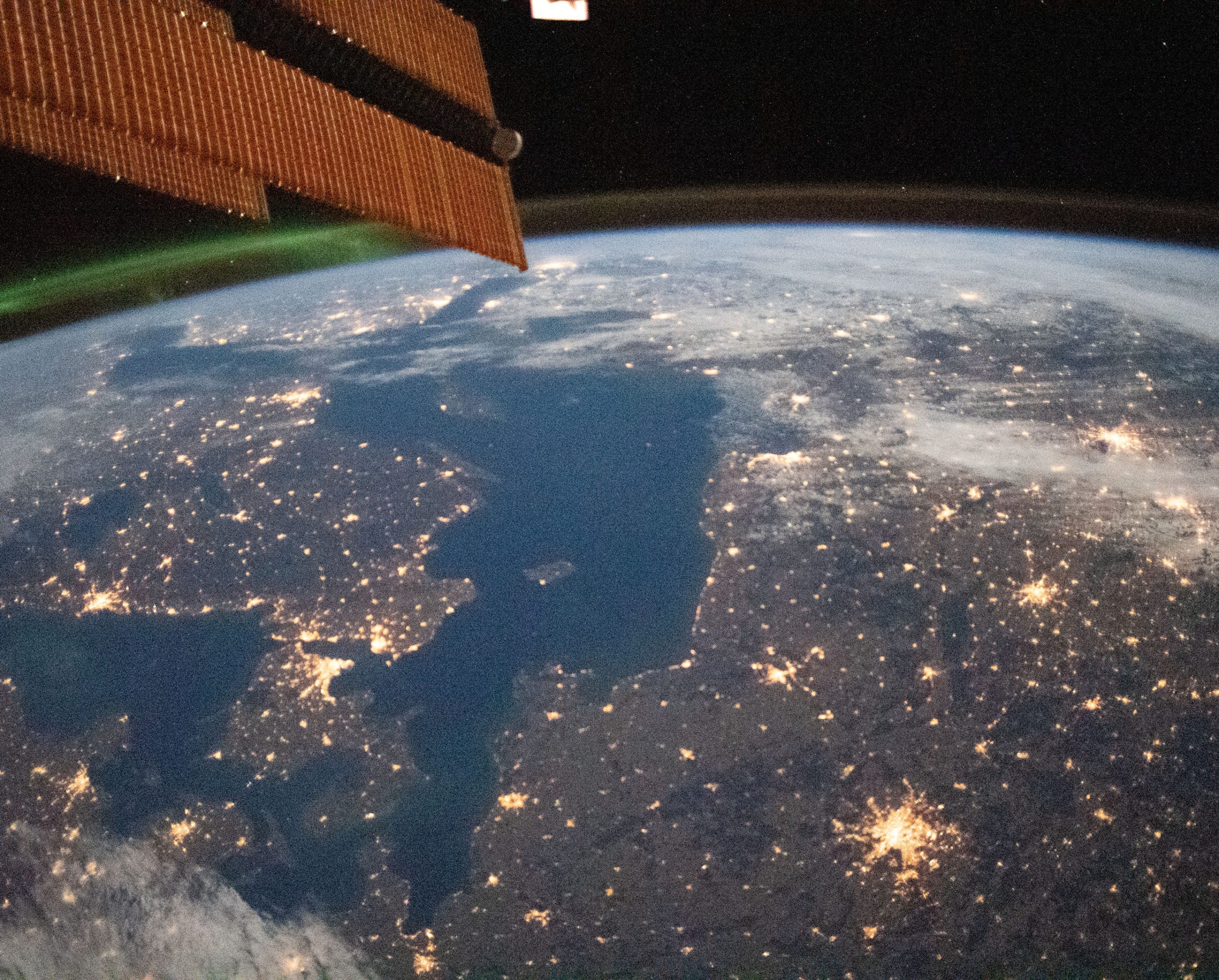
The world is moving toward electrification — cars increasingly rely on battery power, industrial users are shifting away from fossil fuels, and climate policies are influencing consumer power choices even as cooling demands surge. All of this is happening just as power-hungry AI data centers come online and increasing amounts of renewable energy enter the system, much of it from variable sources such as solar and wind.
“We’re at a moment of transition in the energy system,” says Harish Chhaparwal of Arthur D. Little’s (ADL’s) Energy, Utilities & Resources (ENUR) practice. “Electricity is set to become the backbone of the energy system: we expect a 40%-50% [net zero scenario] increase in electricity demand in the next 10 years.”
Is the grid ready for this type of growth? Not quite yet. “Demand is increasing, supply is injected ‘everywhere’ in the network, and the grid was not designed for this new typology and capacity requirement. New grid infrastructure may take seven to 10 years or even more to plan, permit, and build, while new renewable generating capacity such as solar can be added much faster in around one to three years,” says Chhaparwal. In particular, the grid’s capacity to move power from where it is produced to where it is needed is not keeping pace.
“When I started working in the energy sector almost three decades ago, grids were the boring part of the system,” says Kurt Baes, Managing Partner of ADL’s ENUR practice. “There has been a dramatic turnaround. What was a nonissue and nearly unconstrained functionality has now become the key pacemaker of the energy system today: grid development pretty much defines the growth rhythm of the transformation.”
As the increase in renewables smashes up against the less predictable demand from EVs, data centers, and newly electrified industrial facilities, supply is becoming more variable, decentralized, and distributed.
A growing share of wind and solar creates imbalances across time, geography, and system stability, Chhaparwal explains. Unlike conventional generation, wind and solar output depends on weather conditions and time of day, which do not always align with demand. At certain times, the system may produce more electricity than it can absorb, leading to curtailment; at others, renewable output may fall short, requiring backup capacity, storage, or demand-side flexibility to maintain reliability.
More than half of the grid infrastructure in the US and Europe is over 20 years old and initially designed for a one-way flow of electricity (from high-capacity power station to consumer), not for today’s systems in which homes and businesses can feed power into the grid. Additionally, most renewable projects must be sited where the resources are — often a long way from where the power they produce is needed. In many cases, the connections between supply and demand are poor.
Add into this mix today’s volatile geopolitical situation, and “the overarching challenge is affordability, resilience of the system, and security of energy supply,” says Michael Kruse, Global Practice Leader and Managing Partner of ADL’s ENUR practice. “We have seen, due to the crisis in Iran, that oil & gas supply is less resilient than people thought. And the same is true for electricity.”
The grid’s tipping point
The grid is right at its limits, says Ruth Gratzke, President of Siemens Smart Infrastructure in the US. Decentralized and behind-the-meter generation helps mitigate this but makes the overall grid harder to manage, she says.
The challenge for electricity networks is not generating more power but ensuring the system is resilient enough to reliably deliver that power to the right place at the right time. The traditional model of power provision was that supply followed demand, with demand declining or being relatively inflexible and supply being the variable needing control. “That concept no longer works,” says Gratzke.
Utilities and grid operators face multiple challenges, says Karen Wayland, CEO of GridWise Alliance, a group that brings together utilities, solutions providers, and grid companies to focus on grid modernization in the US.
“They have to harden the system against extreme weather, meet energy demand, and replace aging grid equipment. And as a growing number of large-load users — from data centers to chemicals facilities and manufacturers — install behind-the-meter power generation, utilities and these companies are in competition for the same equipment, including turbines to cables and switchgear. Many customers trying to buy gas turbines are finding they are not available until 2029 or 2030,” she explains.
The North American Electric Reliability Corporation (NERC) warns that data centers could cause huge load fluctuations, creating all sorts of grid-stability issues, Wayland points out. This contrasts with traditional large-load users such as chemical plants, whose demand profiles are typically far more predictable.
“Grid operators have to do a better job of understanding loads and put in place standards and technologies to better manage these fluctuations. And given the size of these loads, there will be some responsibility put on the facilities that require them,” says Wayland. “It’s something everyone must think about, but it’s an opportunity, too, for those that can be flexible with their demand. We don’t yet have great ways of compensating customers for their flexibility. It’s partly because we don’t have the market mechanisms; it’s also that we don’t have the grid capacity to deal with flexibility. The grid upgrades must come first.”
Kruse points out that “if you want system resilience, security of supply, and flexibility, someone has to pay for that.” It will likely cost between US $3-$4 trillion to make grids fit to cope with the electricity system of the future, he says.
Although there is certainly a high cost related to upgrades, there are clear human and economic costs to the lights going out, notes Wayland. “NERC has put out severe warnings about reliability. We’re already facing more physical and cybersecurity risks and more severe weather. Now grid operators also need to integrate intermittent renewables.”
We have seen, due to the crisis in Iran, that oil & gas supply is less resilient than people thought. And the same is true for electricity
Creating flexible buffers
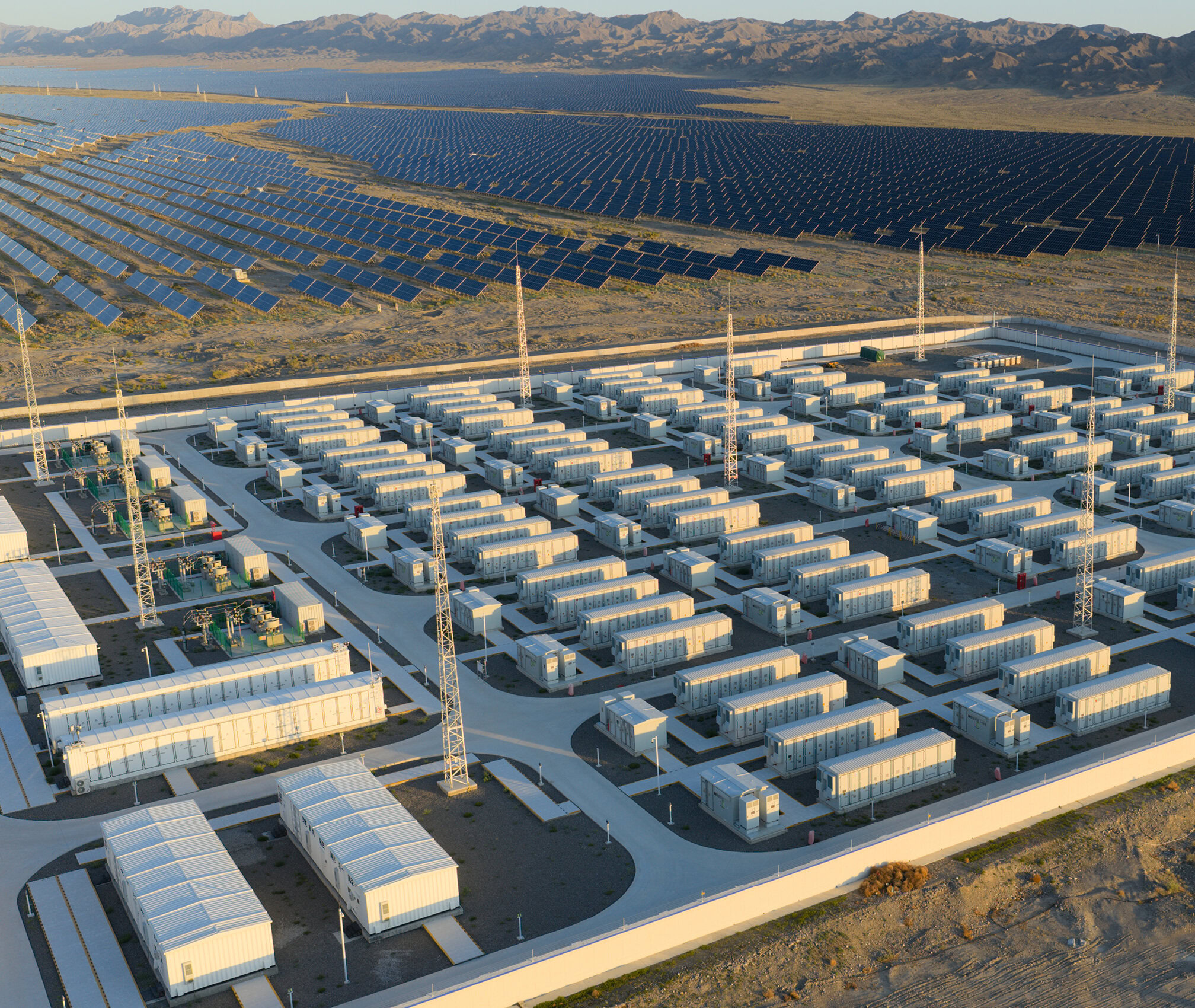
It isn’t clear whether the needed infrastructure, capital, and institutional capability can be scaled fast enough. According to the recent ADL Blue Shift report “The Future of Electricity,” infrastructure investment has focused largely on building and maintaining enough dispatchable generation, transmission, and distribution capacity to reliably serve peak demand, with reserves for contingencies.
“The system was designed around predictability, controllability, and central coordination,” states the report. “As the proportion of variable renewable energy (VRE) increases and demand accelerates, this model is no longer sufficient. Systems now need a flexible buffer model, where reliability is delivered through coordinated supply-side firmness, demand-side flexibility, and digital control.”
“Ten years ago, for every dollar invested in generation, $0.60 was invested in the grid,” says Chhaparwal. “That’s fallen to $0.40. Grid investment has grown in absolute terms, but not nearly at the pace at which generation investment has grown. The US needs to invest $1 trillion in the electricity system by 2030, including grids; in Europe, that figure is $3.5 trillion by 2035. Governments alone cannot make these investments.”
But private investors are reluctant to commit funds to these projects, in part because government policy in many countries is so unpredictable, says Baes. “One moment it’s nuclear, then five days later, it’s no nuclear. It’s a mess. Policymakers don’t have a clear vision of the system, or that vision keeps changing.”
Policymakers need to demonstrate long-term market clarity by aligning incentives to ensure investment is based on what the system requires rather than on ideology, Kruse adds.
Financing is also a board-level challenge, says Baes, “because network companies are building five times as many assets as they used to, but their revenues have not really increased.” Traditional shareholders in power grid companies — often national governments, provinces, or municipalities — are seeing those holdings evolve from stable dividend generators into assets that increasingly require capital increases.
Beyond this comes the structural challenge of execution: even when financing is available, grid and infrastructure expansion projects are often held back for years by land-acquisition issues, permitting delays, supply chain constraints, and/or regulatory approvals.
The challenge for electricity networks is not generating more power but ensuring the system is resilient enough to reliably deliver that power to the right place at the right time
Shaving the peak
While we wait for new grids to be built, we can focus on things like policy, regulation, and technology. The first step, says Gratzke, is to minimize demand using traditional energy-efficiency measures. “What is straining the grid is peak load, so we need to shave that peak as much as possible,” she says. This is where consumers who can be flexible in their demand come in, through measures such as onsite generation, batteries for energy storage, or simply being able to switch off at peak times.
There is also work to be done on the buffer (when grids are designed to cope with peak demand, there is a significant buffer in the system). “In the past, the technology was not sufficient to run the grid close to the edge of peak capacity. We’re looking at ways to reduce that buffer using digital tools,” says Gratzke.
One promising example of grid-enhancing technologies is dynamic line rating. Cables can carry more power when they are cooler, so knowing wind speed, temperature, and the amount of sunshine enables operators to unlock 20%-40% more capacity on existing power lines.
Digital solutions will be an essential element of an upgraded grid. In Florida, researchers found that counties with a higher proportion of advanced meters were able to restore power after an outage more quickly because it was easier for utilities to see where the power was out. “The ability to restore power faster and have better visibility of grid conditions and customer needs has improved with advanced meters,” Wayland says.
Grid software helps operators manage a variety of demand and generation sources and identify bottlenecks in real time, Gratzke says. “These are very advanced computational tasks that take a huge amount of data to process.” Similarly, digital twins let utilities use advanced planning and modeling tools to run everything in a digital safe space before implementing it in the real world.
On the regulatory side, permitting and connection reform are ripe for change. Delays can add years to project timelines, while traditional first-come, first-served connection queues have allowed speculative projects to block more mature ones. “It should not be that way,” says Chhaparwal. “Priority should be based on project readiness, system need, and ability to connect, not simply on who applied first.”
Baes says the permitting system should consider not only marginal generation costs, which tend to favor VRE sources, but also the cost of adapting the grid to manage their variability. This would provide a broader basis for evaluating other generation sources (e.g., nuclear power), which are generally less complex to connect to the grid and integrate into system operations, he says.
“We need a hybrid system with different technologies complementing each other,” Kruse adds. “It can’t be only renewables, only nuclear, only storage.”
Finally, to ensure they can continue to operate in the coming decades, large energy consumers need to change their mindset, no longer thinking of themselves as customers simply plugging into an always-on supply. Instead, they need to see themselves as integral players in a digitally orchestrated energy system.
We need a hybrid system with different technologies complementing each other…. It can’t be only renewables, only nuclear, only storage
Easing the constraint
The grid is becoming a critical constraint in the energy transition. Adding more generation will not solve the problem unless electricity can be moved, balanced, and managed in real time across increasingly complex systems. As demand from electrification, industry, cooling needs, and data centers accelerates, governments, utilities, investors, and large energy users must start to treat grid modernization as a strategic priority rather than an infrastructure issue.
This will require major changes in policy, organization, investment, collaboration, capability building, and technology deployment. It remains to be seen how effectively national and global institutions will respond, but the direction of travel is clear: the countries and companies that move fastest to modernize their grids will be positioned to secure reliable, affordable, and low-carbon power in the decades ahead.
Key takeaways
- Grid development must become much more strategic and proactive, anticipating future needs rather than simply building to meet existing demand.
- Storage, industrial demand response, reserve adequacy, and long-duration resources should be prioritized ahead of rising renewable penetration.
- Advanced forecasting, real-time telemetry, advanced distribution management, network coordination, interoperable data standards, and cybersecurity must be embedded as the grid becomes increasingly complex.
- Given the likely growth of climate and cyber risks, developers must ensure critical supply chains are diversified, firm low-carbon capacity is available, and infrastructure is sufficiently resilient.
- Governance must become far more nimble so it can respond to signals that require rapid reactions.